

In October 2013, the world witnessed a landmark moment in science as the Nobel Prize in Physics spotlighted a British genius whose groundbreaking theory reshaped our understanding of the universe. Professor Peter Higgs, the British physicist who predicted the elusive particle that would be dubbed the “God particle,” finally received the recognition many had awaited for decades.
This particle, the Higgs boson, was confirmed just a year earlier through monumental experiments at CERN’s Large Hadron Collider (LHC), cementing one of the greatest discoveries of the 21st century. Yet, as Britain basks in the glow of this historic achievement, a looming crisis threatens its future role in cutting-edge physics research.
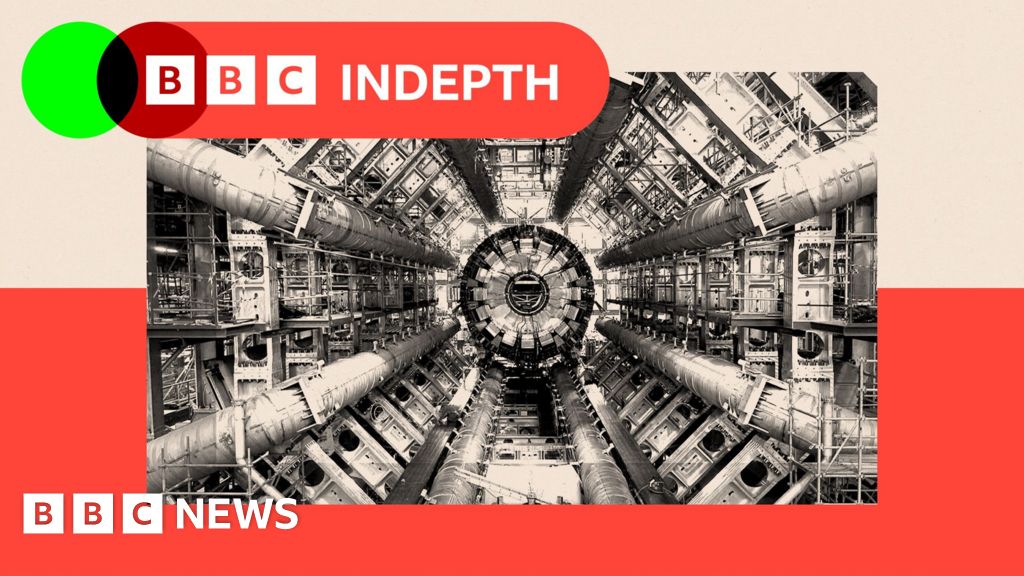
The Higgs Boson Discovery: A British Legacy in Fundamental Science
Nearly 50 years before the Nobel announcement, Peter Higgs theorized the existence of a particle that imparts mass to other particles, an idea that was considered highly speculative at the time. The eventual experimental confirmation at CERN’s LHC not only vindicated Higgs’s theory but also opened new frontiers in particle physics and cosmology.
Higgs himself, who passed away in 2024, emphasized the importance of what is known as blue-sky research—scientific inquiry driven purely by curiosity rather than immediate practical application. “I hope this recognition of fundamental science will help raise awareness of the value of blue-sky research,” he said upon receiving the Nobel Prize.
Historically, the UK has been a powerhouse in blue-sky science, contributing to epochal discoveries like the electron, unraveling the structure of DNA, and pioneering the first programmable computers. These breakthroughs, initially without clear commercial value, have since become the foundation of multi-billion-pound industries that transformed society and technology worldwide.
British Physics Faces Potentially Catastrophic Funding Cuts
Despite this illustrious heritage, the UK now faces a grim future in particle physics and astronomy. The government is reportedly preparing to withdraw funding for the country’s participation in a major upcoming upgrade of the LHC, which would directly impact British scientists’ ability to contribute to the next wave of discoveries.
This cut is part of a broader pattern threatening UK involvement across several pivotal international research projects. The nation risks diminishing its presence in high-profile collaborations that probe the fundamental nature of the universe, from particle accelerators to astronomical observatories.
Such reductions would not only hinder scientific progress but also undermine the UK’s reputation as a leader in fundamental research. The consequences could be severe: lost expertise, the departure of top scientific talent, and diminished influence in shaping the future of global physics.
Why This Matters: The Future of UK Science and Innovation
Cutting back on fundamental research funding contradicts the very spirit that underpinned the Higgs boson discovery and Britain’s historic scientific innovations. Blue-sky research may not yield immediate commercial returns, but it seeds the breakthroughs that drive technological revolutions and economic growth over the long term.
Without sustained investment, the UK risks falling behind in a fiercely competitive global scientific landscape, where countries like the US, China, and members of the EU are ramping up their commitments to frontier research.
For young scientists and future innovators, the message is troubling. The allure of contributing to groundbreaking discoveries fades if funding and infrastructure erode. This could trigger a brain drain, with talent migrating to nations offering more robust support for fundamental science.
Moreover, the public benefits from fundamental physics extend beyond academia. Technologies born from particle physics research have led to advancements in medical imaging, data analysis, and materials science, all of which permeate everyday life.
Looking Ahead: Preserving the Spirit of Discovery
Peter Higgs’s Nobel Prize was more than a personal accolade; it was a celebration of the UK’s enduring commitment to exploring the mysteries of the universe. However, the current trajectory of funding cuts threatens to silence the next generation of discoveries.
It is imperative that policymakers recognize the long-term value of fundamental research and reaffirm the UK’s dedication to international scientific collaboration. Preserving and expanding Britain’s role in projects like the LHC upgrade is essential not only for science but for the nation’s global standing and future prosperity.
As the world continues to push the boundaries of knowledge, the UK stands at a crossroads: embrace its legacy of curiosity-driven research or risk sidelining itself from the very discoveries that once put it at the forefront of human understanding.