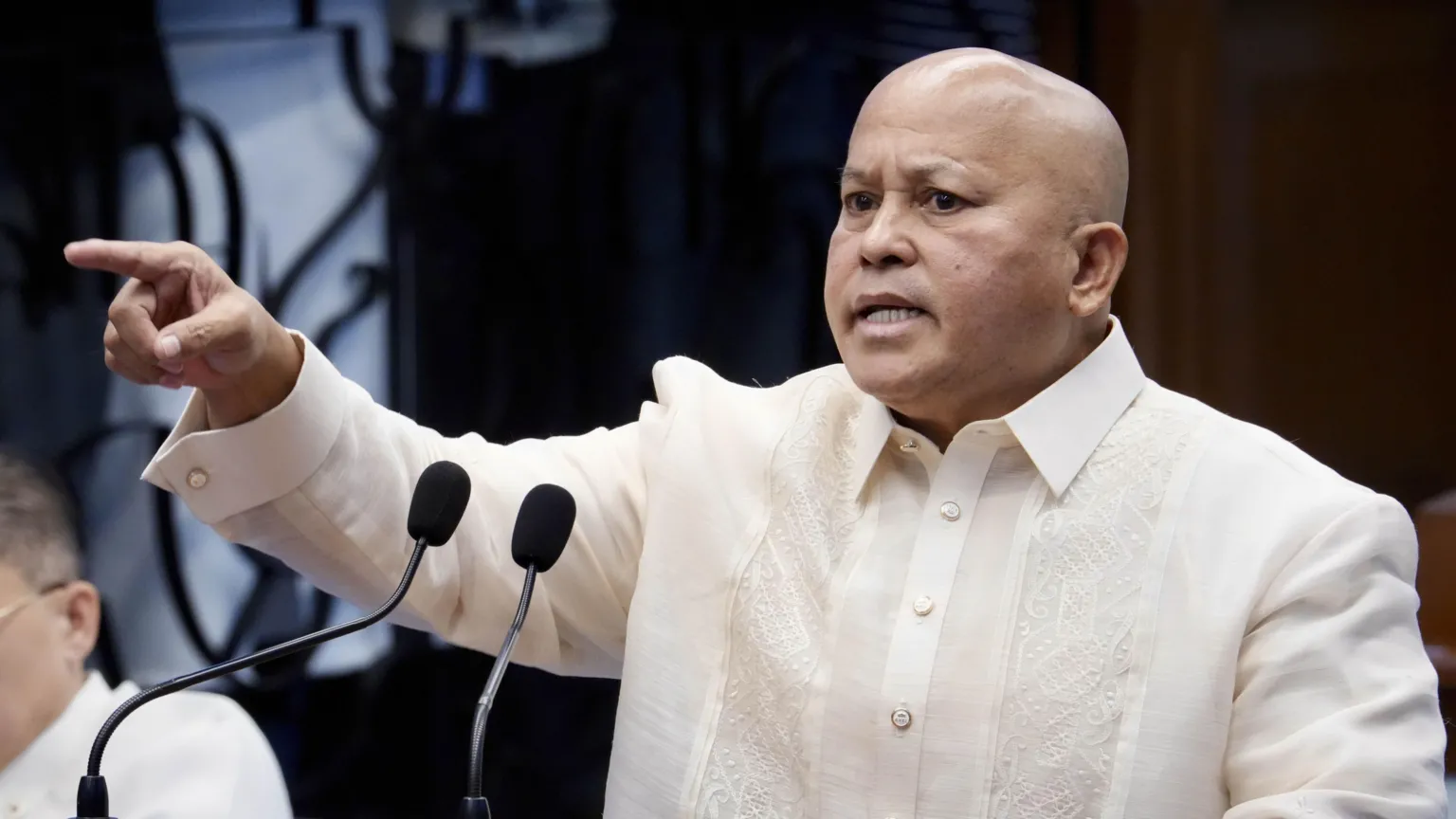
Senator Ronald “Bato” dela Rosa, a prominent enforcer of former President Rodrigo Duterte’s controversial drug war, has successfully avoided arrest over an International Criminal Court (ICC) warrant. The dramatic standoff has unfolded within the halls of the Philippine Senate, exposing deep political rifts and raising questions about the country’s judicial sovereignty.
The Standoff at the Senate: Legal Maneuvers and Political Support
On Tuesday morning, Senator dela Rosa called on his supporters, who had gathered in large numbers outside the Senate building in Manila, to maintain a vigil until the Supreme Court issues a ruling on his legal challenge. His lawyers have filed a petition asking the Supreme Court to block any arrest in the absence of a valid warrant issued by Philippine courts. This legal move highlights the senator’s staunch refusal to acknowledge the ICC’s jurisdiction over him without domestic legal proceedings.
Addressing the media, dela Rosa directly challenged President Ferdinand Marcos Jr., who belongs to a political faction at odds with the Duterte camp. He urged Marcos to pursue any allegations against him through local judicial channels rather than international courts. “If I have an obligation, I will answer it in the local court, not a foreign one,” he asserted, emphasizing his commitment to Philippine sovereignty and legal processes.
Senate Dynamics and Political Divisions
The tense atmosphere in the Senate coincides with recent leadership changes within the chamber. On Monday, the 24-member Senate, dominated by allies of the Duterte political dynasty, elected Alan Peter Cayetano as its new president. Cayetano made it clear that the Senate would only act upon arrest warrants issued by Philippine courts, effectively signaling resistance to the ICC’s international mandate.
This stance contrasts sharply with the House of Representatives, controlled by President Marcos’s allies. Earlier on the same day, the lower chamber voted to impeach Sara Duterte, the current vice-president and daughter of the former president, marking her second impeachment attempt. This development underscores the ongoing power struggle between the Duterte and Marcos factions, which is playing out through legislative and judicial battles.

Why This Matters: The Broader Implications for Philippine Justice and Politics
The confrontation surrounding Bato dela Rosa’s ICC arrest warrant is more than a legal skirmish—it reflects a deeper conflict over accountability, governance, and national sovereignty in the Philippines. Dela Rosa, once the national police chief under Duterte, was a key figure in the administration’s aggressive anti-drug campaign, which has drawn widespread international condemnation for alleged human rights abuses.
The ICC’s involvement represents an attempt by the international community to hold Philippine officials accountable for alleged crimes against humanity. However, the Duterte-aligned Senate’s refusal to cooperate with the ICC and the legal challenge mounted by dela Rosa illustrate the limits of international law when faced with strong nationalist sentiments and political protectionism.
At the same time, the ongoing political rivalry between the Duterte and Marcos clans complicates the issue further. While the Senate, dominated by Duterte loyalists, shields dela Rosa, the Marcos-controlled House is actively moving against Duterte’s family members, demonstrating how legal and political strategies intertwine in this high-stakes power contest.
Looking Ahead: The Battle Over Jurisdiction and Accountability
The Supreme Court’s forthcoming decision on the legality of the ICC arrest warrant will be pivotal. A ruling in favor of dela Rosa could set a precedent reinforcing the primacy of local courts over international legal bodies. Conversely, a decision allowing ICC intervention could open the door to more international scrutiny of Philippine officials linked to the drug war.
For now, Senator dela Rosa remains a symbol of resistance against what his faction views as foreign interference, while the Philippines grapples with how to balance international obligations and national sovereignty in a politically fractured environment.
In essence, the saga of Bato dela Rosa’s ICC arrest warrant not only spotlights the unresolved tensions surrounding the Duterte administration’s drug war but also underscores the complex interplay of law, politics, and power in the Philippines today.