NASA has urgently scheduled a trio of spacewalks to repair a critical cooling system malfunction aboard the International Space Station (ISS), including one unprecedented excursion set for Christmas Day. This rapid response underscores the significance of maintaining the station’s delicate thermal regulation amid its continuous operation in orbit.
What Happened: Cooling System Failure Disrupts ISS Operations
Last Wednesday, a vital segment of the ISS’s cooling infrastructure abruptly failed when a key ammonia-circulating line stopped functioning. This cooling system is indispensable because it expels the immense heat generated by onboard electronic equipment and life-support systems. Without effective heat dissipation, internal temperatures can quickly rise to dangerous levels, threatening both the equipment and the crew.
In response to the failure, the station’s six-member crew, comprising two Americans, three Russians, and one Japanese astronaut, had to power down all non-essential systems to conserve resources and maintain safety. This shutdown included suspending several ongoing scientific experiments, highlighting the impact of technical issues on the station’s research mission.
Flight controllers initially attempted to resolve the problem remotely by troubleshooting a valve that appeared to be malfunctioning. When these efforts proved unsuccessful, they devised a temporary workaround using an alternative valve to manage the cooling system’s temperature. Although this stopgap measure provided short-term relief and allowed the station to continue operating, it was not considered a sustainable solution.
Given the critical nature of the cooling system, NASA and station managers decided to execute a series of spacewalks to implement a robust and permanent repair. This decision reflects the agency’s commitment to the safety and operational integrity of the ISS, especially considering the risks posed by an extended reduced-cooling state.

Upcoming Spacewalks: A High-Stakes Mission in Orbit
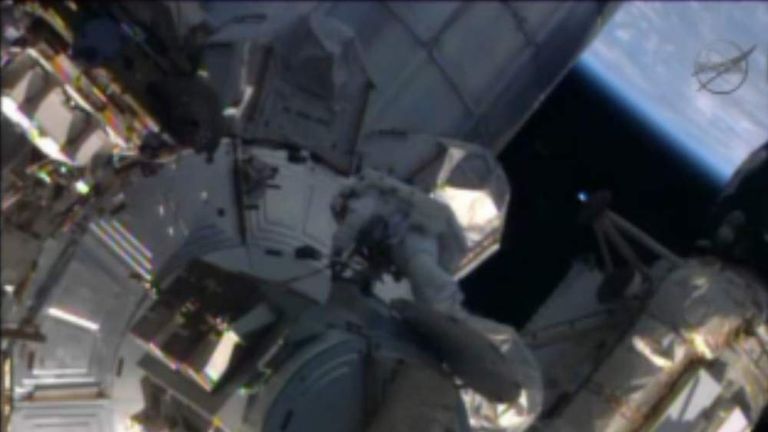
NASA has scheduled three spacewalks for this urgent repair project, set for Saturday, Monday, and Wednesday, with the middle walk coinciding with Christmas Day. Two American astronauts will venture outside the station to replace or repair the faulty cooling line components. This schedule is particularly notable because spacewalks on major holidays are rare and emphasize the mission’s urgency.
Veteran astronaut Rick Mastracchio provided insight into the upcoming workload, tweeting from space that the week ahead would be busy with spacewalks and that communication might be limited during this critical period. His message illustrates the intense focus and preparation required for these extravehicular activities (EVAs), which demand meticulous coordination between the crew and ground control teams.
This repair effort is reminiscent of a similar operation in 2010, when astronauts conducted three spacewalks to replace the same ammonia pump. The complexity and risk involved in servicing the station’s cooling system highlight the astronauts’ expertise and the engineering challenges of maintaining equipment in the harsh environment of space.
The scheduled EVAs have also impacted other ISS operations. Notably, NASA has postponed the launch of a supply ship from Virginia, originally planned to resupply the station. The launch has now been delayed until at least mid-January to prioritize the urgent repair work. This delay demonstrates how critical system maintenance can influence the broader logistics and scheduling of ISS missions.
Why It Matters: Safeguarding the ISS and Its Crew
The ISS operates as a uniquely complex laboratory and habitat orbiting Earth, relying on intricate systems to support human life and scientific research. The ammonia cooling circuit is a fundamental part of this infrastructure, responsible for maintaining safe temperatures amid constant heat generation by computers, power systems, and experimental apparatus.
While the astronauts remain safe and comfortable at present, restoring full cooling capacity is essential to prevent vulnerability in the event of additional system failures. A compromised cooling system could jeopardize critical life-support functions and scientific instruments, potentially forcing evacuation or limiting research activities.
By prioritizing these spacewalks, NASA ensures the ISS can continue its vital role in advancing space science, international cooperation, and technology development. The repair also serves as a testament to human ingenuity and resilience, demonstrating how astronauts and engineers collaborate to solve complex problems millions of miles from Earth.
Looking ahead, the successful completion of these spacewalks will reinforce the ISS’s operational stability and prepare it for future missions. It also provides valuable experience for maintaining space hardware, knowledge that will prove crucial as humanity pushes further into deep space exploration.
In summary, the upcoming spacewalks to fix the ISS cooling line represent a critical, high-stakes endeavor that balances crew safety, scientific progress, and the ongoing viability of humanity’s outpost in orbit. The prompt and decisive action by NASA and its astronauts exemplifies the dedication required to keep the space station functioning smoothly in the face of technical challenges.