

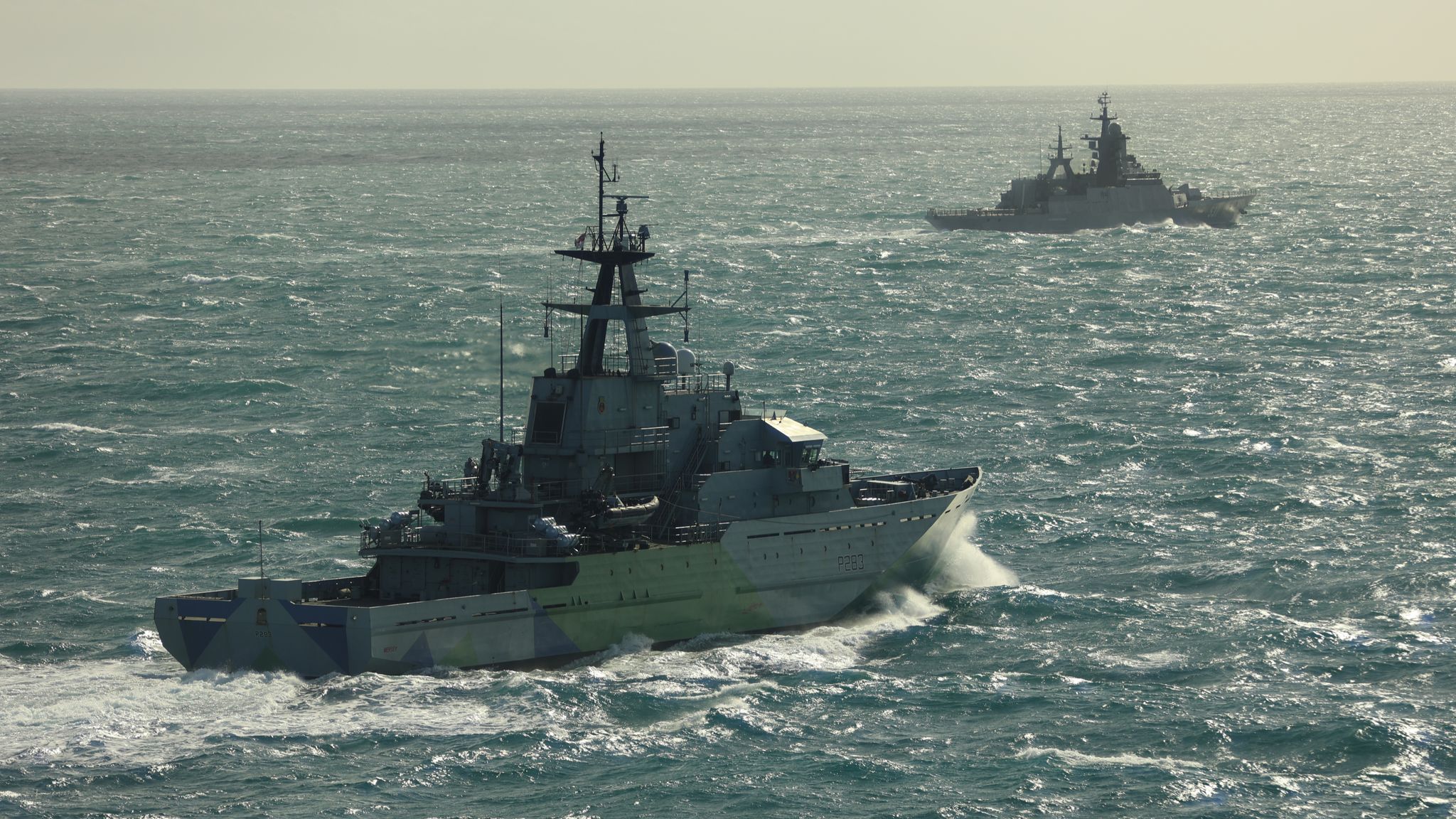
The United Kingdom is spearheading a new, powerful alliance of northern European navies to safeguard their waters against an escalating Russian threat. This bold move aims to create a rapid-response maritime force capable of defending key sea routes and deterring hostile actions in a volatile geopolitical climate.
The Birth of the Northern Navies Initiative
At the forefront of this strategic effort is General Sir Gwyn Jenkins, the First Sea Lord and head of the Royal Navy. Following a recent high-level meeting of naval leaders from northern Europe, a significant milestone was reached with the signing of a “statement of intent” to establish what is being called the Northern Navies Initiative. This coalition brings together allies from the Baltic and Nordic countries, the Netherlands, and potentially Canada, to forge a united front on the seas.
General Jenkins outlined the vision during a lecture at the Royal United Services Institute (RUSI), emphasizing that the initiative is designed not just as a defensive measure but as an agile, ready-to-act force. “We know we have no time to lose,” Jenkins stated. “By the end of this year, I want us all to have signed a formal declaration laying the foundation for a vital and enduring partnership.”
This new naval collaboration is modeled after the UK’s successful Joint Expeditionary Force (JEF), a military partnership involving ten northern nations that includes the Baltic states and Nordic countries. The Northern Navies Initiative will build on this framework but focus specifically on maritime, air, and amphibious strike capabilities.
Capabilities and Strategic Advantages
Unlike larger alliances such as NATO, this smaller, more specialized force aims to deliver faster, more coordinated responses in times of crisis. General Jenkins highlighted the advantage of rapid decision-making and tighter integration, which can mean the difference between containment and escalation in maritime confrontations.
“I aim to create a maritime force that trains, exercises, and prepares together,” Jenkins said. “A force designed to fight immediately if required, with real capabilities, real war plans, and real integration.”
One innovative aspect of the initiative is the concept of a “hybrid navy”, blending crewed and increasingly uncrewed vessels. This approach enhances flexibility and combat readiness while enabling seamless sharing of sailors, spare parts, and ammunition among member nations. Jenkins described this as forming a “family of allied fleets” — a level of cooperation not seen in decades.
The operational command for this northern naval force could be centralized at a major maritime headquarters located in Northwood, just outside London. This hub would coordinate joint exercises and real-time responses to emerging threats.
Responding to the Growing Russian Menace
The urgency behind the initiative stems from a marked increase in Russian naval aggression, particularly from the Russian Northern Fleet. In the past two years, Russian intrusions into UK and allied waters have surged by nearly one-third. In 2025 alone, the Royal Navy responded to dozens of incursions by Russian surface vessels, underscoring the persistent threat to homeland security.
General Jenkins, who is notably the first Royal Marine to lead the Royal Navy, expressed particular concern about Moscow’s submarine activity. “Our submarines spent a substantial amount of time responding to Russian subsurface operations last year,” he explained. “All signs suggest this pattern will only intensify.”
Russian submarines pose a unique challenge due to their stealth and capability to disrupt vital undersea infrastructure, such as communication cables. The UK’s response involves not only readiness but also developing new tactics and technologies to counter underwater threats effectively.
What This Means for Regional Security
The Northern Navies Initiative represents a strategic pivot toward enhanced maritime security in a region critical to global trade and military balance. By pooling resources and expertise, northern European navies aim to establish a persistent deterrent that is stronger collectively than any single nation alone.
This alliance also sends a clear message to Russia and other potential aggressors that the UK and its partners remain vigilant and prepared to defend their maritime sovereignty. The initiative stands as a testament to renewed commitment and solidarity amid rising tensions in the Arctic and North Atlantic.
As the geopolitical landscape evolves, the success of this naval coalition could serve as a blueprint for other regional partnerships seeking to enhance security through cooperation and innovation.
Looking Ahead
With the formal declaration expected by the end of this year, the Northern Navies Initiative is poised to become a cornerstone of European maritime defense. The coming months will see detailed planning, joint exercises, and integration efforts accelerate to ensure the force is ready to act decisively when called upon.
For the UK and its allies, this marks a crucial step in adapting to the modern challenges of naval warfare and safeguarding their seas against persistent threats. As General Jenkins affirmed, the Royal Navy and its partners must remain ready every day, every month, and every year to meet the challenges posed by an increasingly assertive Russia.