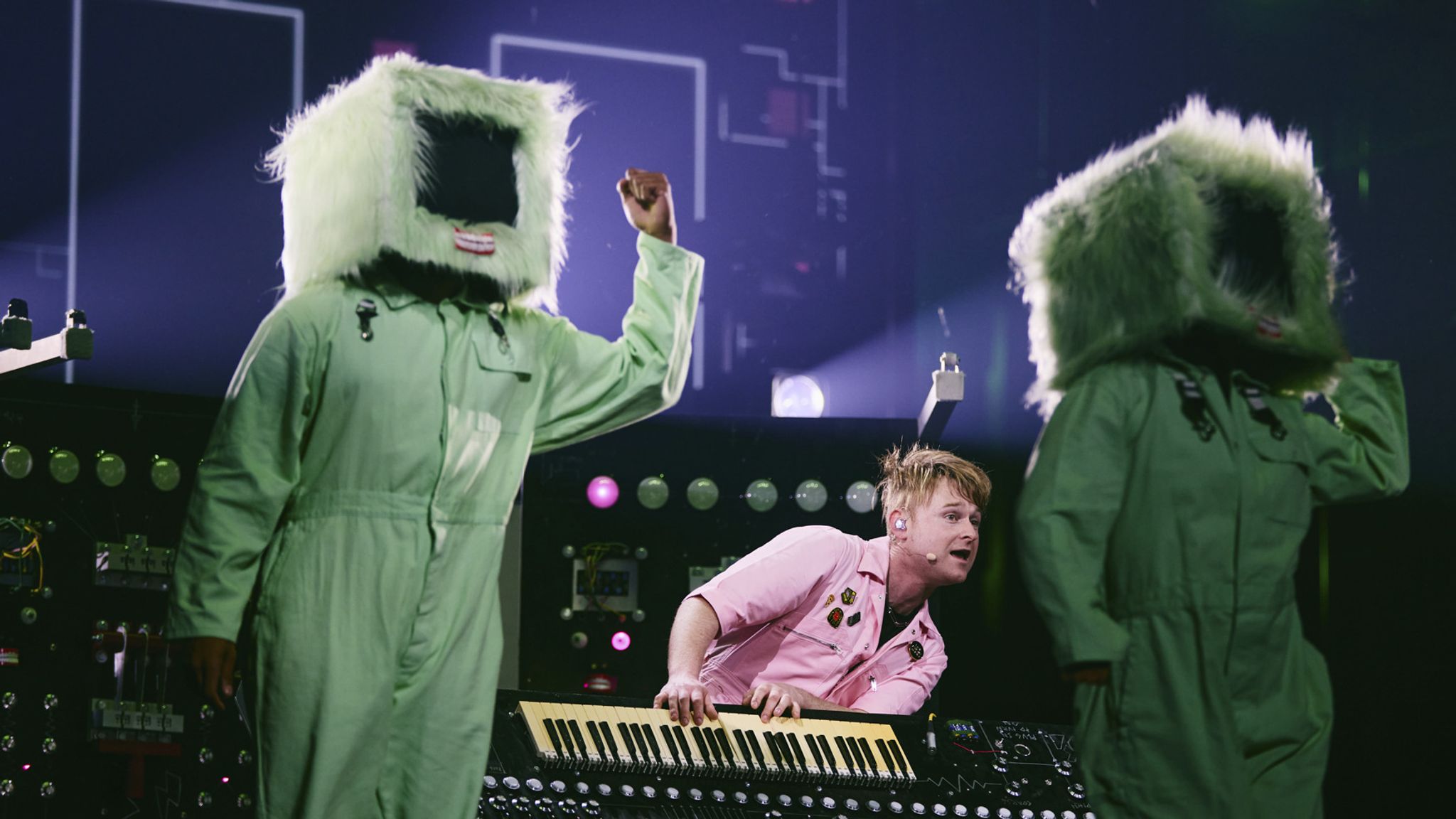
As the 70th Eurovision Song Contest unfolds in Vienna, the UK’s entry is poised to captivate audiences with a one-of-a-kind live performance featuring a specially built “mega synthesiser.” Sam Battle, known online as Look Mum No Computer, has poured immense effort into preparing for the contest, balancing new fatherhood with the demands of an electrifying show.
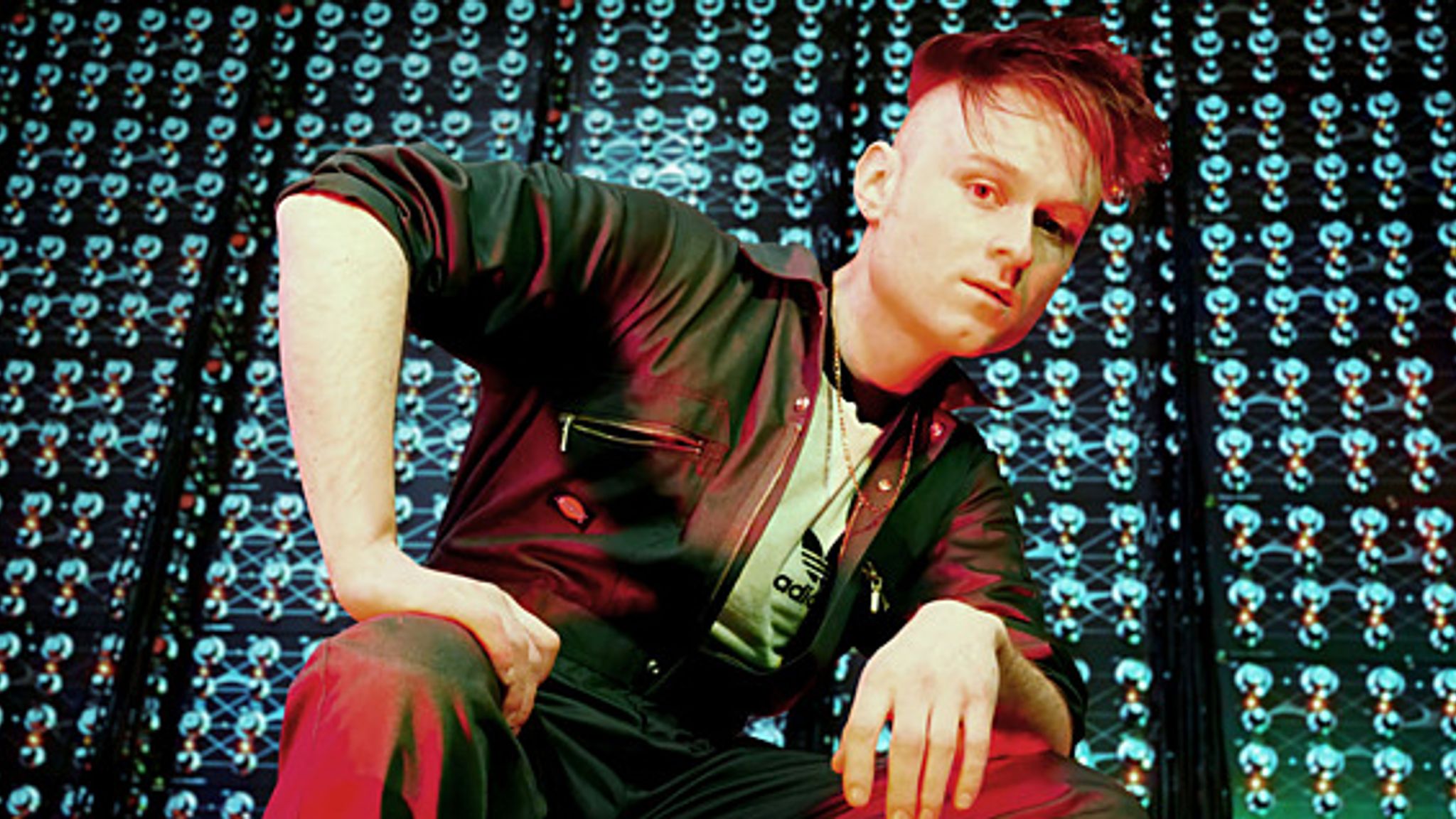
Meet Sam Battle: The Electronic Music Innovator Behind the UK Entry
Born and raised in Lincolnshire, Sam Battle has carved out a unique niche in the electronic music world since launching his YouTube channel in 2013. With over 85 million views and more than 1.4 million combined followers across social platforms, Battle has gained a reputation for creating bizarre and inventive musical devices. His projects have included crafting an organ from Furby toys, merging a synthesiser with a Raleigh Chopper bicycle, and building a triple oscillator synthesiser from Nintendo Game Boys.
Battle’s inventive spirit perfectly aligns with his Eurovision song, Eins, Zwei, Drei, which promises to stand apart from traditional entries. His approach has attracted praise from Eurovision stalwarts like broadcaster Graham Norton, who remarked, “The song is different to anything else we’ve ever entered, and I can really imagine the whole arena getting behind it.”
Preparing for the Stage: Challenges and Collaborations
In an exclusive interview ahead of the semi-finals, Battle shared insights into his preparations. “It’s been a lot of work,” he admitted, especially since becoming a new father. He humorously noted that if he weren’t rehearsing for the contest, he’d likely be changing his newborn’s nappy. Despite the pressures, Battle expressed pride in the performance they have crafted and excitement to bring it to life on the Eurovision stage.
Central to the act is a “mega synthesiser” designed specifically for the event. Although some of his more ambitious ideas didn’t come to fruition—he joked about the BBC’s reluctance to trust his welding skills—the final setup promises an innovative audiovisual experience. Battle also highlighted his collaboration with choreographer Fredrik Rydman, describing him as a “really cool guy” who has pushed the creative boundaries of the show’s staging. This partnership aims to deliver a performance that is both sonically and visually compelling.
Battle teased, “I don’t want to give it all away, so you’ll have to tune in to see me perform on Thursday’s semi-final.” This air of mystery adds to the anticipation surrounding the UK’s entry.
Eurovision 2025: Context and Controversies
The 70th edition of Eurovision, hosted at Vienna’s Wiener Stadthalle, unfolds amid heightened attention and political tensions. The final is scheduled for 16 May, following semi-finals on 12 and 14 May.
This year’s contest has not been without controversy. Several countries—including Iceland, the Netherlands, Spain, Ireland, and Slovenia—have announced withdrawals from Eurovision 2026, citing objections to Israel’s participation. The dispute traces back to new, stricter rules introduced in November 2024 after allegations of Israeli government interference in the previous contest. After a vote among participating broadcasters, Israel’s place was upheld, prompting accusations of a “cultural boycott” from Israel’s national broadcaster KAN.
Despite these geopolitical undercurrents, the UK’s entry remains focused on delivering an unforgettable performance. Historically, the UK last won Eurovision in 1997 with Katrina and The Waves’ “Love Shine A Light.” While winning remains a challenging prospect in the fiercely competitive contest, supporters like Graham Norton remain hopeful, saying, “Never say never.”
What This Means for the UK’s Eurovision Future
Sam Battle’s participation marks a fresh, experimental direction for the UK’s Eurovision strategies, embracing electronic innovation and theatrical staging. His willingness to blend unconventional musical instruments with cutting-edge choreography could signal a shift toward more daring performances from the UK in future contests.
The integration of a custom-built “mega synthesiser” not only showcases Battle’s signature style but also elevates the UK’s presence on a global stage, potentially inspiring other artists to push creative boundaries. For fans and critics alike, the upcoming semi-finals and final will be a crucial test of whether innovation can translate into tangible success in Eurovision’s competitive arena.
As the spotlight turns to Vienna, all eyes will be on Look Mum No Computer’s electrifying performance, which promises to challenge expectations and invigorate the UK’s standing in this iconic international music event.