

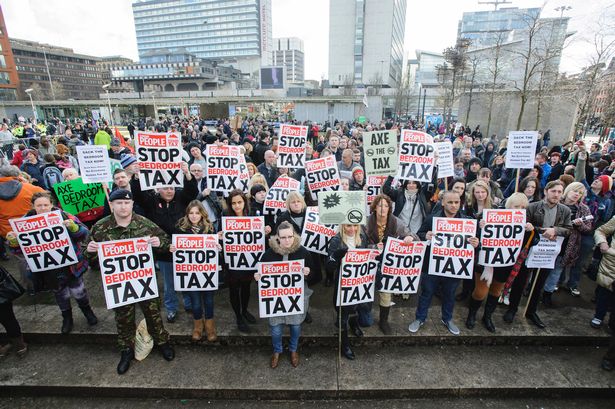
The “Bedroom Tax” controversy has resurfaced with renewed intensity as the Liberal Democrats publicly withdraw their support, igniting a fierce clash within the coalition government and raising profound questions about policy direction and political credibility.
The Shift in Liberal Democrat Stance
Deputy Prime Minister Nick Clegg recently acknowledged that the policy commonly referred to as the “Bedroom Tax” was fundamentally flawed and unfair in its current form. Speaking candidly, Clegg declared, “I think when something isn’t working, you fix it.” This marks a significant departure from the party’s previous endorsement of the measure, which had been a key component of the coalition government’s welfare reforms.
The policy, officially known as the under-occupancy penalty, reduces housing benefits for social housing tenants deemed to have more bedrooms than necessary. The government’s rationale for this reduction is to eliminate what it terms the “spare room subsidy,” aiming to encourage tenants to move into smaller, more appropriately sized homes and thereby free up larger properties for families in greater need.
However, a government report released on a recent Tuesday revealed that this objective was not being met effectively. The report highlighted that 60% of affected tenants fell into rent arrears and that only 4.5% had successfully relocated to smaller accommodation. This data underpinned Clegg’s assertion that many individuals were unfairly penalised simply because suitable smaller properties were not available. In his view, it is unjust to reduce benefits for people unable to move to more appropriate housing.

Details of the Proposed Reforms
The Liberal Democrats’ revised position involves three major proposed changes to the bedroom tax policy. Firstly, they advocate exempting disabled people from the penalty, recognising the unique challenges faced by this group in adapting to different housing sizes. Secondly, they propose protecting tenants who cannot find smaller properties from facing any benefit reductions. Thirdly, they emphasize the urgent need to increase the availability of affordable housing, suggesting a target of 300,000 additional affordable homes to better meet demand.
This policy shift was publicly revealed by Chief Secretary to the Treasury Danny Alexander in an article for the Daily Mirror. Alexander’s announcement caught many by surprise, not least the Conservative coalition partners, who claimed they were not consulted prior to the disclosure. Tory sources expressed frustration, describing the announcement as “news to us,” which exposed tensions within the coalition.

Despite the Liberal Democrats’ change of heart, the Conservative Party remains steadfastly committed to the bedroom tax. Tory officials criticized the Lib Dems for what they described as a “volte-face” that undermines their credibility. The Conservatives accused their coalition partners of inconsistency, stating, “They say one thing and do another. They have no conviction in their beliefs.” This criticism resonates strongly given the Liberal Democrats’ previous breach of a 2010 manifesto promise regarding university tuition fees, which already dented their reputation for trustworthiness.
Political Fallout and Broader Implications
The announcement has sparked a political firestorm. Labour’s Shadow Work and Pensions Secretary, Rachel Reeves, accused Nick Clegg of “unbelievable hypocrisy,” pointing out that the Lib Dems had initially voted in favour of the bedroom tax. Reeves emphasized that the policy would not exist without Lib Dem support and criticized their absence when Labour proposed legislation to scrap the tax earlier in the year.
Within the Liberal Democrat party itself, the pressure to oppose the bedroom tax had been mounting. At a recent party conference, activists overwhelmingly voted to review what they called a “reprehensible and evil” policy. This internal push played a significant role in catalyzing the leadership’s reconsideration.
Mr. Alexander indicated that the Lib Dems intend to persuade the Conservative Party to adopt these reforms. Should the Tories refuse, the Lib Dems are prepared to force a vote in the House of Commons, underlining the seriousness of their commitment to change. This revised approach is also set to feature prominently in the Liberal Democrats’ manifesto for the 2015 general election, signaling a strategic recalibration ahead of the polls.
__IMAGE_PLACEHOLDER_2__
Why This Matters
The bedroom tax debate touches on fundamental issues of social justice, housing policy, and political accountability. At its core, the controversy reveals the difficulties governments face when attempting to balance fiscal responsibility with fairness and compassion in welfare policy.
For tenants across the United Kingdom, especially those living in social housing, the bedroom tax has translated into financial hardship and housing insecurity. The shortage of smaller homes, exacerbated by austerity measures and limited construction of affordable housing, means many people are trapped in unsuitable homes yet penalized for their circumstances.
Politically, the dispute exposes strains within the coalition government and poses questions about the effectiveness of power-sharing arrangements between parties with differing priorities. The Liberal Democrats’ volte-face may restore some public confidence within their base but risks alienating coalition partners and voters who see the shift as inconsistent or opportunistic.
Looking ahead, the resolution of this issue will test the government’s ability to craft policies that are both economically sustainable and socially equitable. It will also influence the Liberal Democrats’ standing in the upcoming election and their longer-term role in shaping Britain’s welfare landscape.
Ultimately, the bedroom tax saga underscores the complexity of housing reform in the modern era and the critical need for policies that address the realities faced by vulnerable populations without sacrificing fairness or political integrity.