

A calculated act of desperation unfolded at Beijing’s International Airport when a man detonated a homemade bomb in protest against alleged police brutality that left him permanently disabled. This incident has cast a spotlight on the struggles faced by individuals known in China as “petitioners,” who seek justice against local government corruption but often encounter silence or repression instead.
Who Is Ji Zhongxing and What Led to the Explosion?
The man behind the blast is Ji Zhongxing, a 44-year-old from Shandong Province, born in 1979. Ji belongs to a broader demographic of Chinese citizens who travel to the capital to appeal directly to the central government for redress of grievances, a practice known as petitioning. These petitioners frequently challenge local authorities over issues such as unlawful land seizures, malpractice in public institutions, or other abuses of power.
Ji’s case emerged in stark detail through his own online posts on Weibo, China’s microblogging platform comparable to Twitter. His blog, which includes graphic photographs, recounts a harrowing story of police violence in 2005. Ji claims that local police officers severely beat him because he operated an unregistered bike taxi service in his hometown. The beating, he says, was so brutal it left him paralyzed from the waist down.
Despite his disability, Ji’s determination to highlight his plight and the corruption he accuses the local police of has not waned. His decision to carry out the bomb detonation at Beijing Capital International Airport’s Terminal 3, the largest terminal and primary arrival point for international flights, was a deliberate choice to maximize visibility for his protest. Terminal 3’s prominence ensures that any disturbance there quickly captures national and international attention.

The Incident and Its Immediate Aftermath
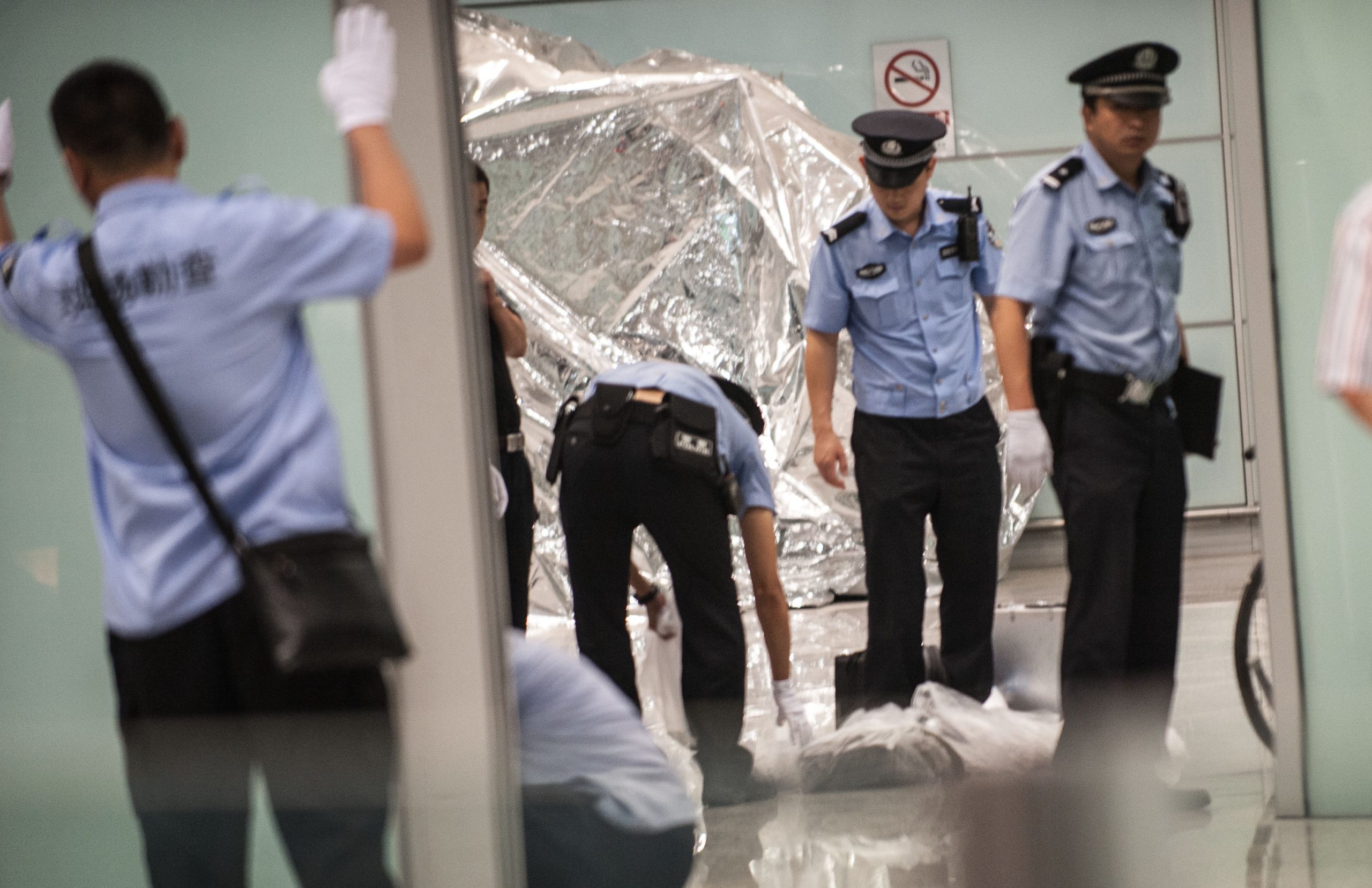
On the day of the explosion, Ji detonated a small, homemade bomb just outside the arrival doors where passengers emerge from international flights. Despite the presence of crowds nearby, the bomb’s limited power meant that Ji was the only person injured. This suggests that his primary aim might not have been to harm others but rather to draw attention to his cause and suffering.
The scene rapidly became a focal point for media and bystanders, with multiple photographs taken and shared on Weibo. The images circulated widely, igniting conversations about police corruption and the hardships endured by petitioners like Ji. However, the authorities acted swiftly to restore normalcy. Within thirty minutes, cleaning crews had removed scorch marks from walls and floors, erasing physical evidence of the blast and minimizing any lingering sense of disruption.
This rapid cleanup reflects a broader pattern in China, where the government prioritizes maintaining social order and controlling narratives around incidents that could challenge authority. Reports indicate that censors are actively deleting online posts and discussions related to the blast to prevent the spread of dissenting views or sympathy for Ji’s protest.
What This Incident Reveals About Petitioners and Government Response
Ji Zhongxing’s protest exemplifies the deep frustrations felt by petitioners across China. These individuals often face a bureaucratic maze when attempting to seek justice for local abuses. The central government, while theoretically responsible for overseeing local authorities, rarely intervenes effectively in individual cases. Petitioners frequently endure long, exhausting journeys to Beijing only to be met with indifference or outright rejection.
This sense of helplessness can escalate into extreme acts of protest, as seen in Ji’s case. By targeting a high-profile location like Beijing’s main airport, he ensured his grievance reached a wide audience, including international travelers and media outlets. Yet the swift government response to suppress information about the incident underscores the challenges petitioners face in gaining meaningful attention or reform.
Moreover, the incident highlights the tension between individual rights and state control in modern China. While the country has witnessed rapid economic development and modernization, these advances coexist with stringent controls on free expression, particularly when it comes to criticizing authorities or exposing corruption.
__IMAGE_PLACEHOLDER_1__
Why It Matters and What Comes Next
Ji Zhongxing’s protest is more than an isolated event at an airport. It is a vivid illustration of the broader struggle between citizens seeking justice and a government determined to maintain social stability and control the narrative. The plight of petitioners like Ji reveals systemic issues in local governance, where corruption and abuse of power continue to provoke public outrage.
For international observers and human rights advocates, the incident raises urgent questions about how China addresses grievances and the limits of peaceful protest under its political system. For domestic audiences, it serves as a reminder of the risks faced by those who dare to challenge local authorities.
Moving forward, the incident may prompt increased scrutiny of petitioning practices and the treatment of disabled individuals who have suffered state violence. While the government’s immediate reaction focused on damage control and censorship, the underlying issues Ji Zhongxing exposed remain unresolved, reflecting the ongoing complexities of governance and human rights in China.
Ultimately, Ji’s act of protest at Beijing Airport stands as a powerful, if painful, testament to the human cost of corruption and the desperate lengths to which some will go to be heard.